Latest News
 Office of Travel and Tourism director tours Franklin County, looks to increase presence
 DA to announce breakthrough in 1989 unsolved homicide in Warwick
 Montague voters to decide spending requests for litigation, airport and library design
 Clean energy proposals head to Ashfield Annual Town Meeting
 Pushback: Your home’s power plant could save our energy grid
 Judge sets bail for Millers Falls assault suspects
 Citizen’s petition on tax rate tabled in Bernardston
 Orange Selectboard declares armory as surplus property
 Student voting petition rejected in Deerfield

Doors open at Tilton Library’s temporary home at South Deerfield Congregational Church
SOUTH DEERFIELD — It was business as usual at Tilton Library on Wednesday morning — just in a slightly different location.The library reopened Wednesday in its temporary space at the South Deerfield Congregational Church, 71 North Main St., just a few...

Mohawk Trail Regional School looks to leave audiences humming, smiling at spring musical
BUCKLAND — Mohawk Trail Regional School’s theater program is bringing audiences a light-hearted, family-friendly musical for its spring production: “You’re a Good Man, Charlie Brown.”Performances will be held Friday, May 3, and Saturday, May 4, both...
Most Read
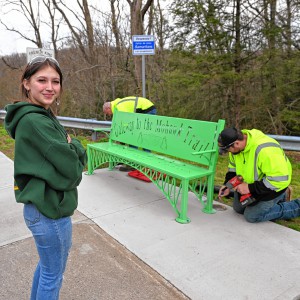 Franklin Tech student welds artistic bench for French King Bridge
 On The Ridge with Joe Judd: What time should you turkey hunt?
 State records show Northfield EMS chief’s paramedic license suspended over failure to transport infant
 Former Greenfield man granted new trial after 1995 murder conviction, walks free
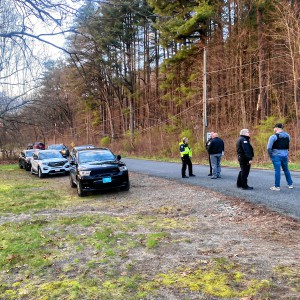 Police report details grisly crime scene in Greenfield
 Formed 25,000 years ago, Millers River a historic ‘jewel’
Editors Picks
 Self-expression on display: See ServiceNet members’ artwork at Greenfield Public Library
 Sounds Local: Broadway star returns to Greenfield for concert: Kevin Duda to sing with Franklin County Community Chorus this Sunday
 PHOTOS: Making an impression
 Greenfield Notebook: May 2, 2024
Sports
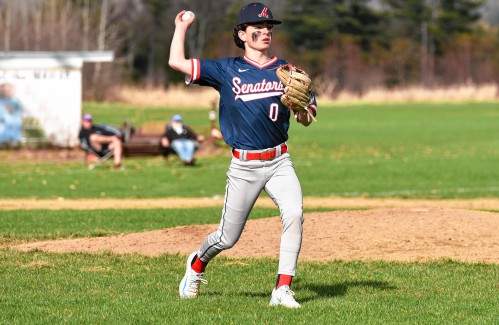
High Schools: Sam Connors pitches Mahar past Smith Vocational, 1-0
Sam Connors tossed a gem, and the Mahar baseball team avenged a loss to Smith Vocational earlier this season with a 1-0 win in an independent contest on Tuesday in Orange.Connors went all seven innings, striking out 10 while scattering six hits and...
 Bulletin board: Greenfield Post 81 American Legion baseball tryouts begin this weekend
 Baseball: Fifth inning rally propels Pioneer past Frontier (PHOTOS)
 MIAA Power Rankings: Turners, Greenfield, Tech atop Div. 5 softball rankings
 High Schools: Frontier boys, girls track stay unbeaten with wins over Mohawk Trail (PHOTOS)
Opinion

My Turn: Modern wood heat not carbon bogeyman
I’m writing in response to Katy Eiseman’s recent column, “Must stop subsidizing wood-fired energy,” [Recorder, April 5]. We’re concerned that readers may have walked away with a misunderstanding of the issue, and hope this column will clear things...
 My Turn: Unneeded, twice-rejected raise back for another vote in Erving
 My Turn: How to keep right on killing
 Anne R. George: City should help seniors keep their homes
 Tom Peabody: Lucky to have Blake Gilmore

Business

Goddard finds ‘best location’ in Shelburne Falls with new Watermark Gallery space
SHELBURNE FALLS — The 20 Bridge St. space that formerly housed Molly Cantor’s pottery now displays Watermark Gallery’s eclectic collection of modern art pieces.Local artist Laurie Goddard opened Watermark Gallery last month as her seventh location in...
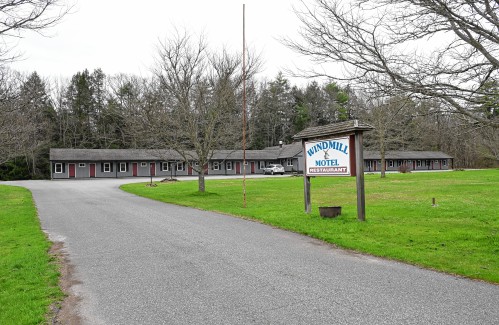 New buyer of Bernardston’s Windmill Motel looks to resell it, attorney says
 New Realtor Association CEO looks to work collaboratively to maximize housing options
 New owners look to build on Thomas Memorial Golf & Country Club’s strengths
 Cleary Jewelers plans to retain shop at former Wilson’s building until 2029
e-Edition
Arts & Life

Sharing the gift of spring: The tradition of making May Baskets for May Day
May 1, May Day, arrives almost halfway between the vernal equinox and the summer solstice. Although spring officially arrives on the former day, our weather often doesn’t feel springlike until April … and, as recent weeks have shown, it can sometime...
 Tips for planning a successful garden: Creating a healthy garden is all about maintaining good habits
 Speaking of Nature: Bird of my dreams, it’s you: Spotting a White-tailed Tropicbird on our cruise in Bermuda
 Embracing both new and old: Da Camera Singers celebrates 50 years in the best way they know how
 Time to celebrate kids and books: Mass Kids Lit Fest offers a wealth of programs in Valley during Children’s Book Week
Obituaries
 Jennifer M. Read
South Deerfield, MA - Jennifer Read of South Deerfield, beloved wife and mother, died peacefully on April 21, 2024 at the age of 79 after a long struggle with Alzheimer's disease. Jennifer was born on January 1, 1945 at Brooklyn Naval ... remainder of obit for Jennifer M. Read
 Candance Loughrey
Northfield, MA - Candace Bleakley Loughrey, of Old Turnpike Road in Northfield, died April 25 at Fisher Home Hospice in Amherst after a valiant struggle following a stroke. She was 77. She was born May 27, 1946, along with her twin sist... remainder of obit for Candance Loughrey
 Robert A. York
Greenfield, MA - Robert A. York passed away peacefully on April 24, 2024 at his home in Greenfield, MA, surrounded by his wife and children. He was 77 years old. Bob had been battling 5 unrelated cancers since 2008. He was born on Febru... remainder of obit for Robert A. York
 Edith Celia Handleman
Edith Celia (Climan) Handleman Greenfield, MA - Edith "Edie" Handleman of Greenfield, Massachusetts, died on Wednesday, March 27, 2024, at 101 years and 8 months of age. Edith Celia Climan was born in Hartford, CT. When she was five years ... remainder of obit for Edith Celia Handleman